Complete Rules & Card Guide
Ages 8+ | 2–4 Players
Playtest Edition – October 2026. Rules and components may change following playtesting.
Welcome to Gem Jam!
A magical card game of collecting gems, casting spells and outsmarting your opponents. Build four complete gem sets to win — but beware, your rivals have a few tricks up their sleeves!
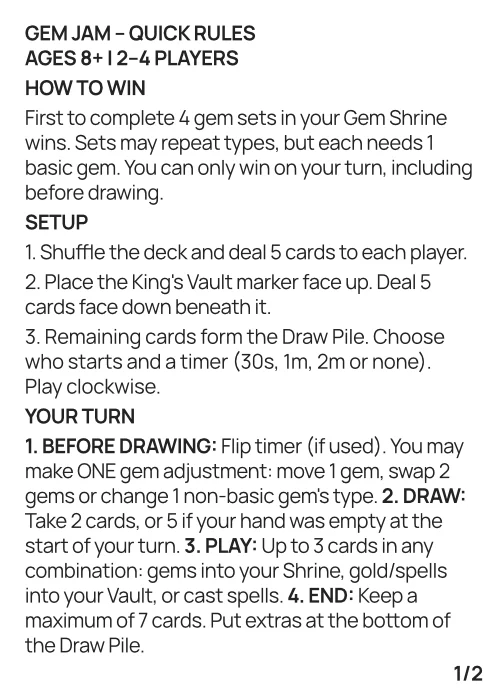
1. How to Win
Be the first player to complete four sets of matching gems in your Gem Shrine.
Each completed set must contain the required number of gems, including at least one Basic Gem of that type. Dual Gems and Gem Wildcards can help complete sets, but cannot replace this requirement.
You may collect multiple sets of the same gem type, provided the previous set of that type is complete.
You can only win during your own turn. This includes immediately at the beginning of your turn, before drawing cards.
If you complete four sets during another player’s turn, you must wait until your turn begins to declare victory. If one of those sets is broken before then, you must complete four valid sets again.
2. What’s in the Box?
The current playtest edition includes:
- 172 playing cards
- 1 King’s Vault marker
- 2 double-sided Quick-Start Cards
- 1 folded Box Rules sheet
- 3 optional sand timers: 30 seconds, 1 minute and 2 minutes
- 3 optional adult-only Siren’s Call cards
Card quantities and components may change before final production.
172 playing cards
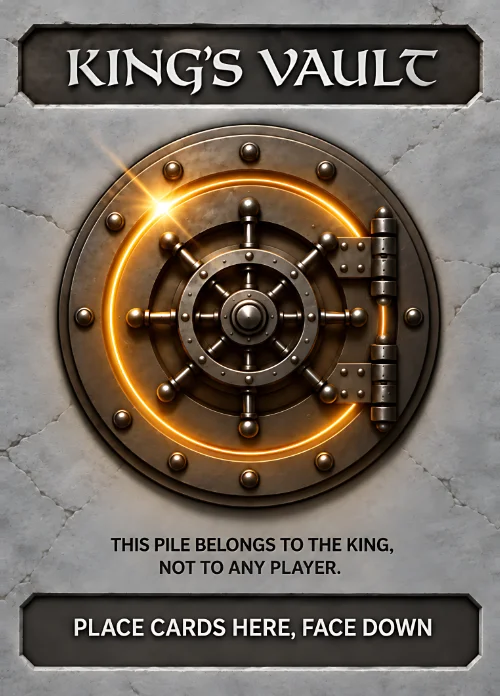
1 King’s Vault marker
2 Quick-Start Cards
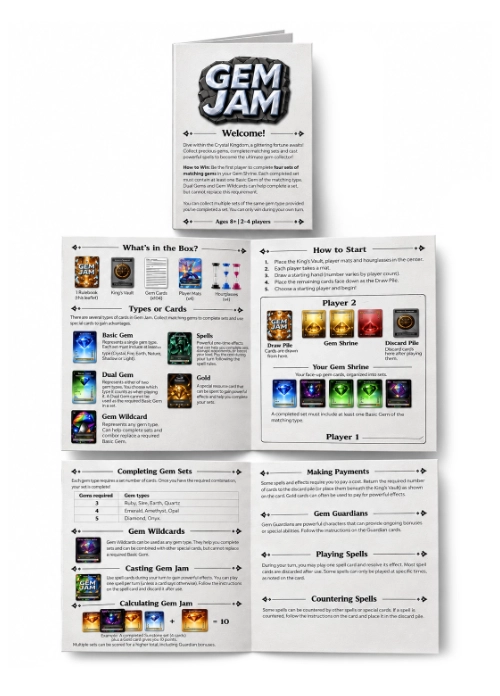
1 folded Rules sheet
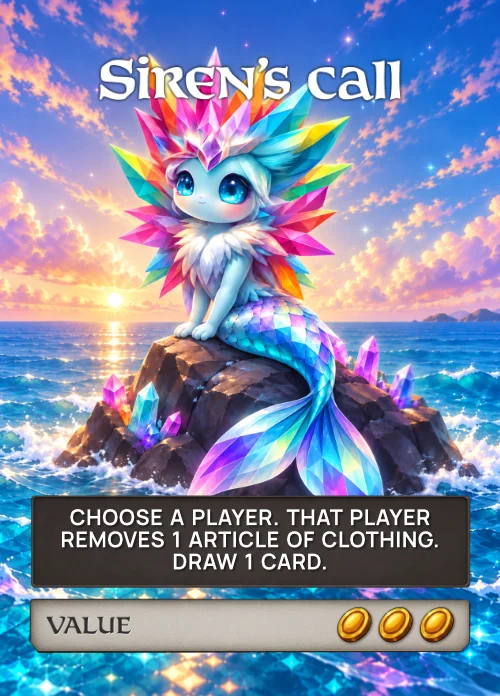
3 optional cards
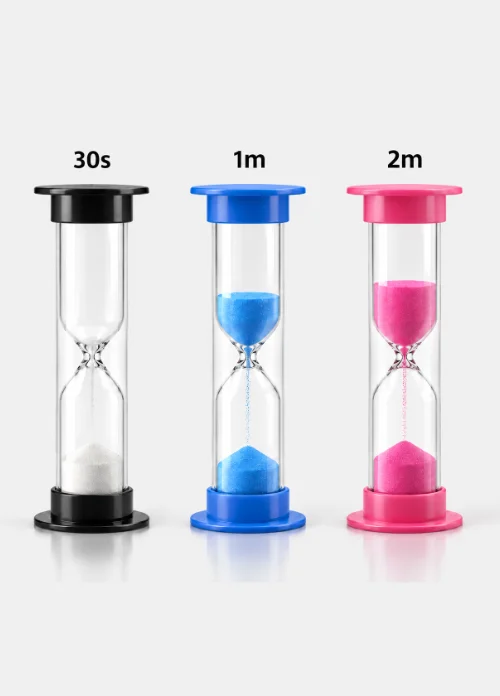
3 sand timers
3. Types of Cards
There are three main types of cards: Gems, Spells and Gold.
Gem Cards
Gem Cards are played face up in your Gem Shrine. Collect matching gems to complete sets and strengthen your Gem Jam spells.
Basic Gems
Represent a fixed gem type. Each completed set must contain at least one Basic Gem, which also qualifies you to cast Gem Jam. Basic Gems retain their printed gem type at all times.
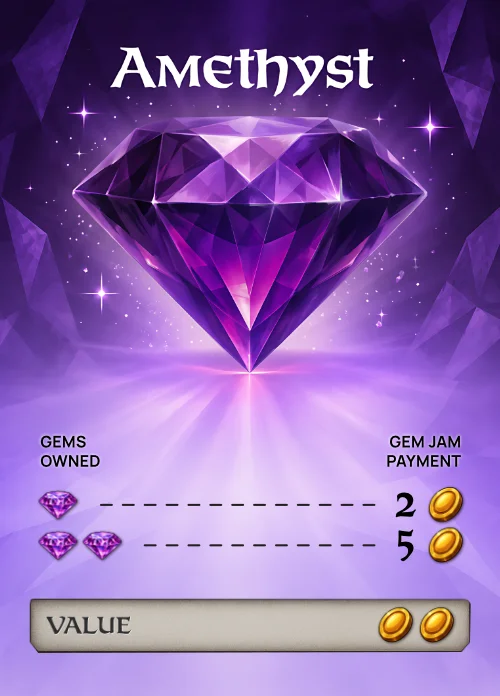
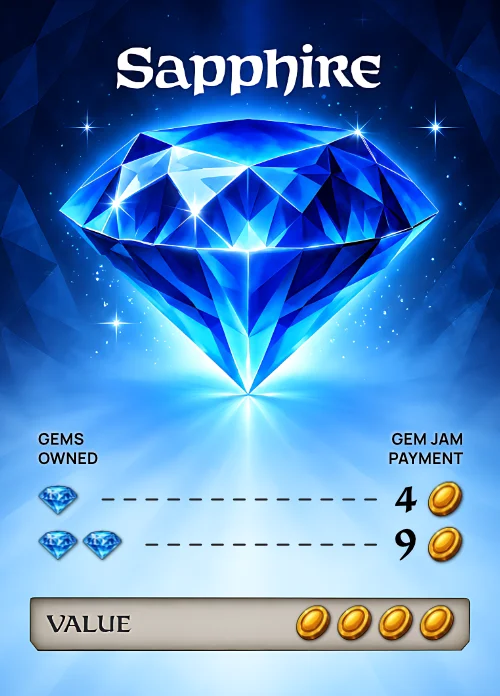
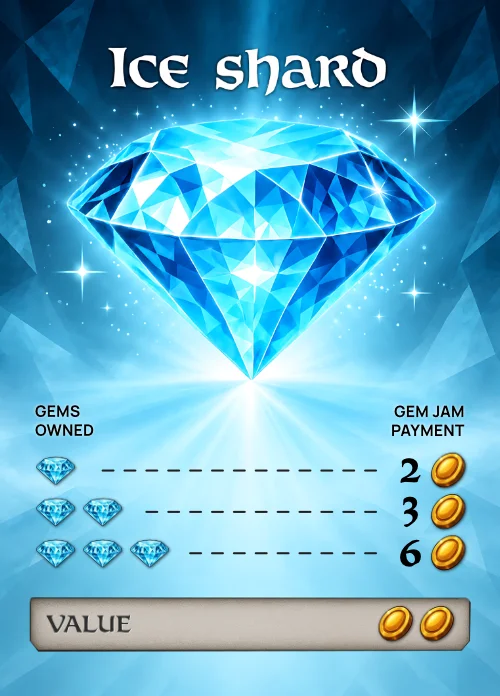
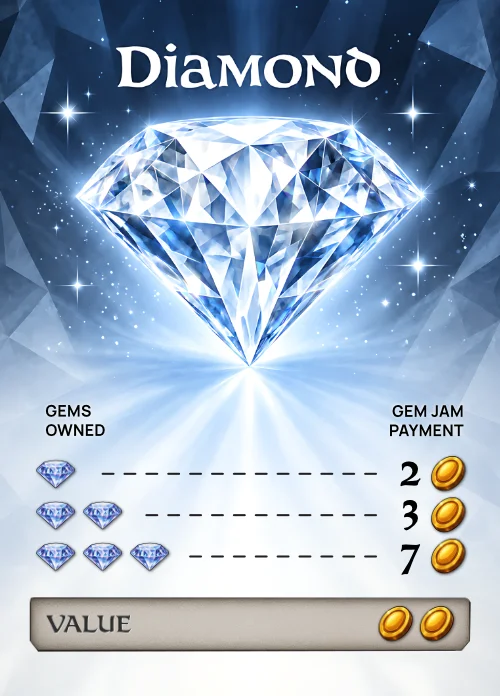
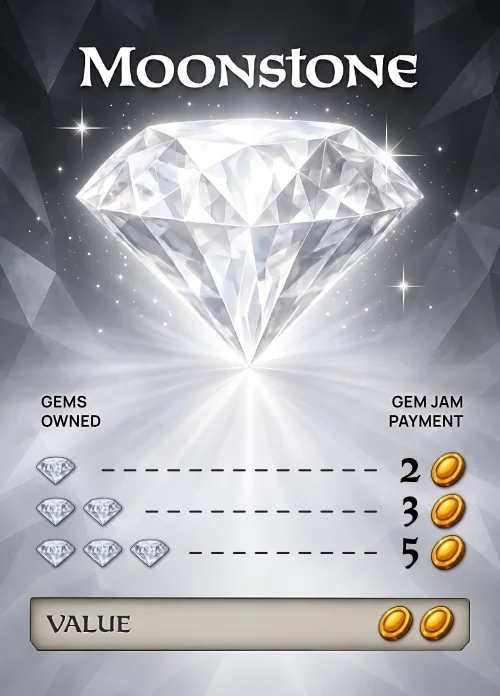
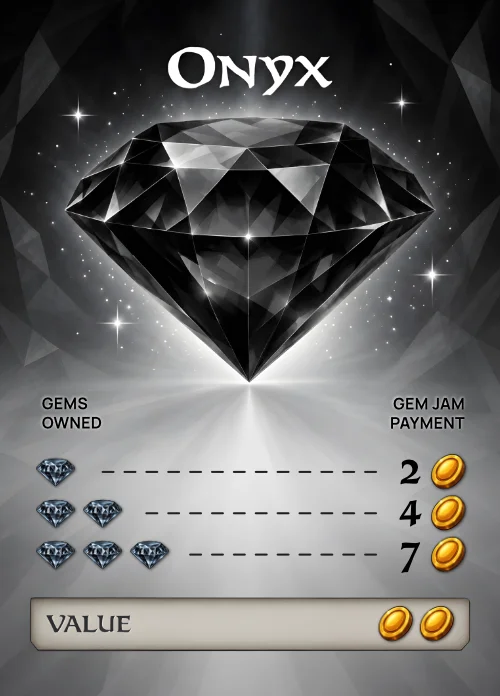
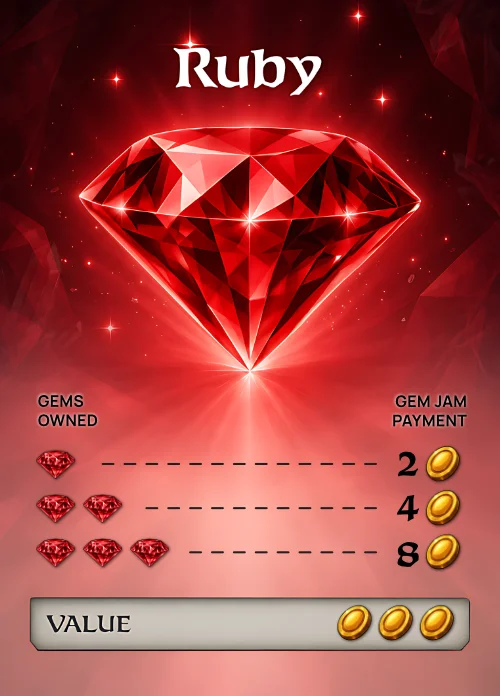
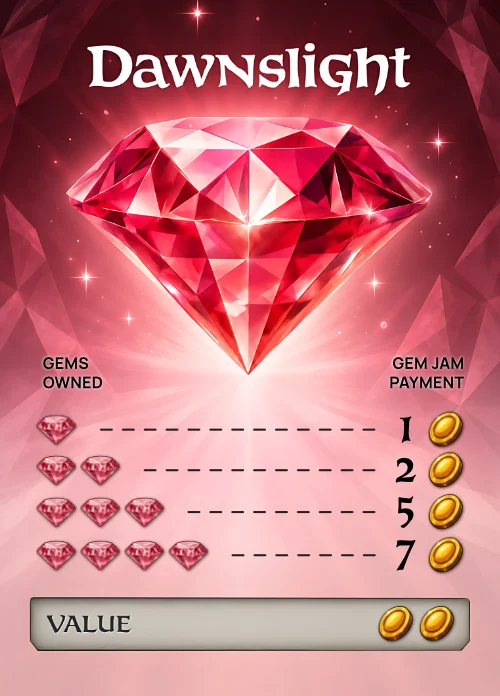
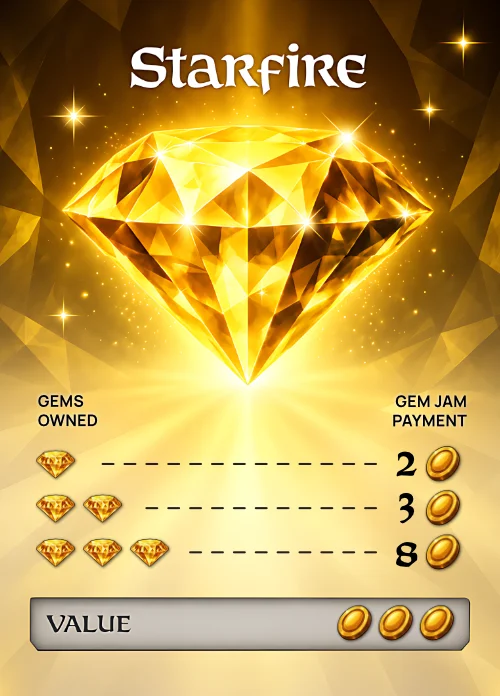
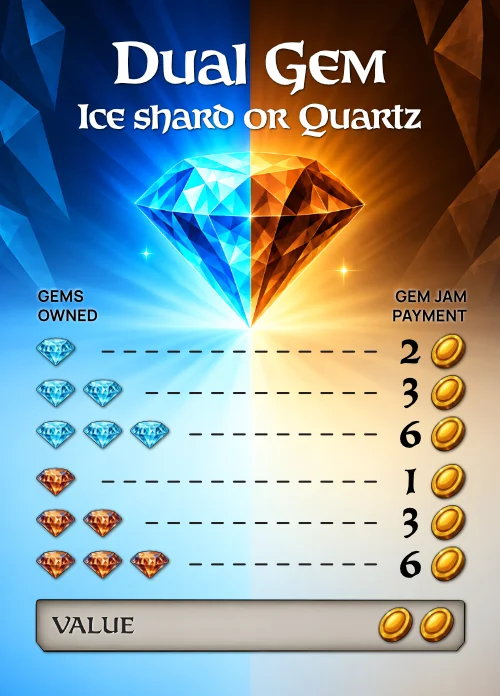
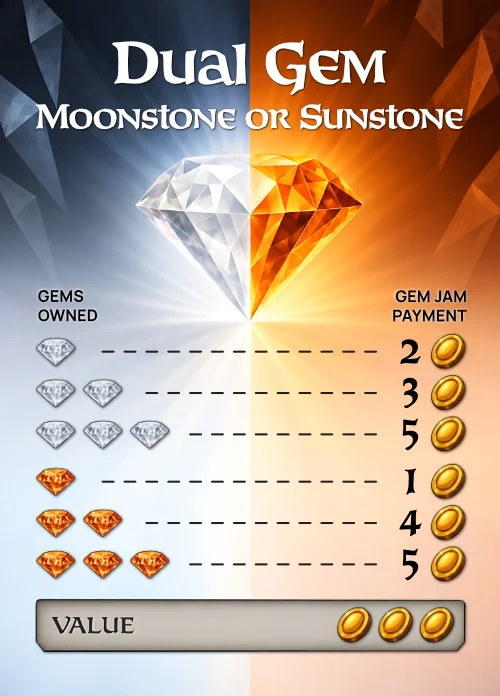
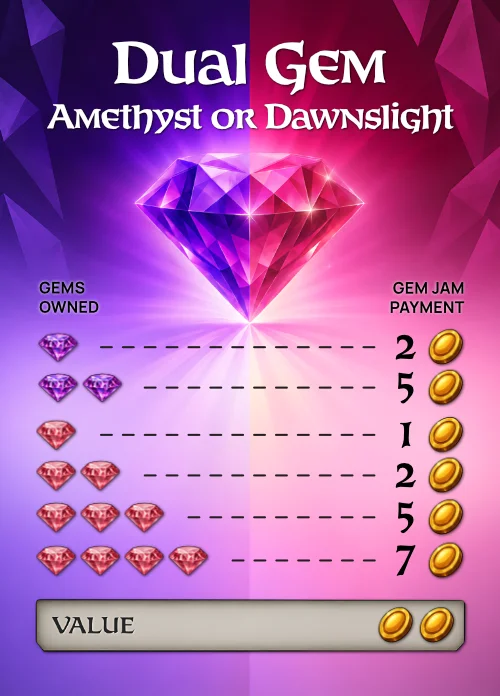
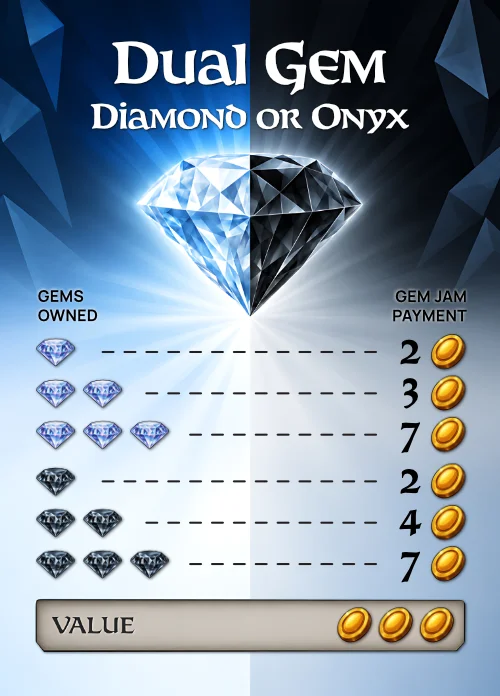
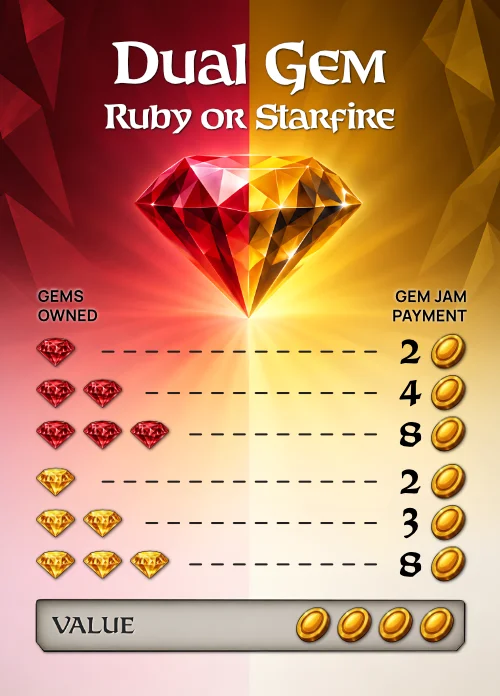
Dual Gems
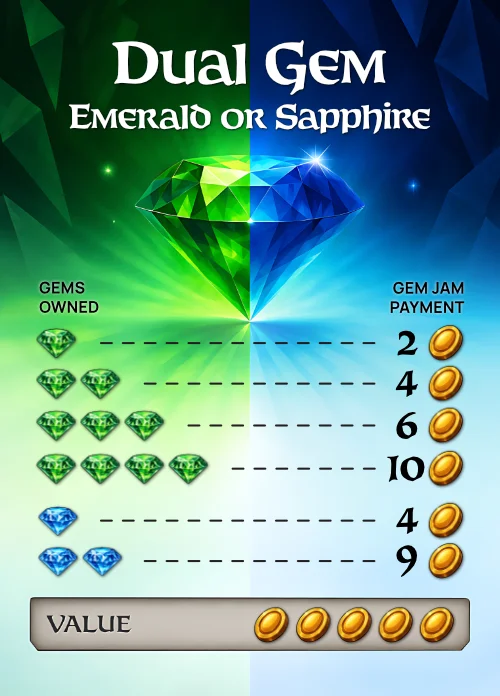
Represent either of two gem types. Can qualify you to cast Gem Jam, but cannot replace the Basic Gem required to complete a set.
A Dual Gem represents only one of its two types at a time. You choose its type when playing it and may change it through a permitted adjustment. Dual Gems have printed gold values and can be used as payment.
Gem Wildcards
Represent a permitted gem type according to their card instructions. Can help complete sets and increase Gem Jam payments, but cannot replace a Basic Gem or qualify you to cast Gem Jam. Have no gold value.
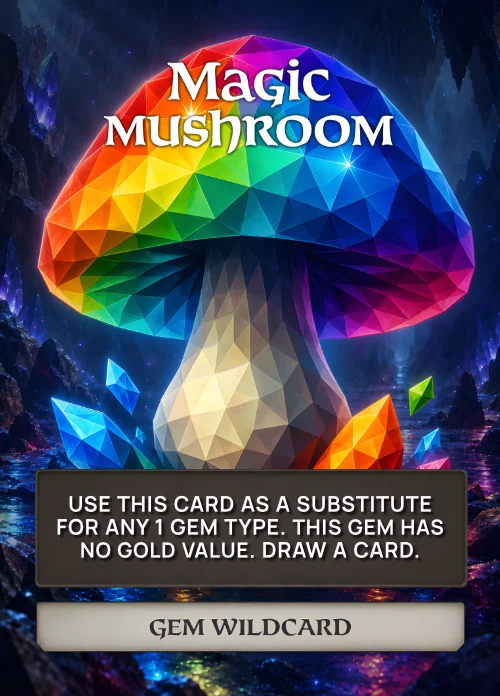
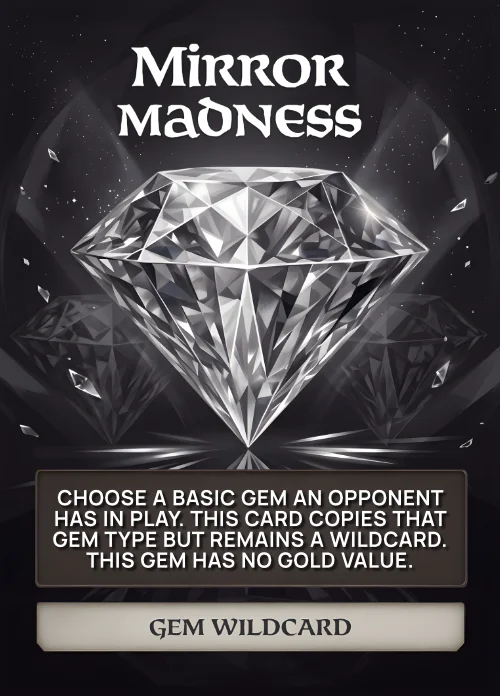
The four Gem Wildcards are Rainbow Gem, Magic Mushroom, Poison Cup and Mirror Madness.

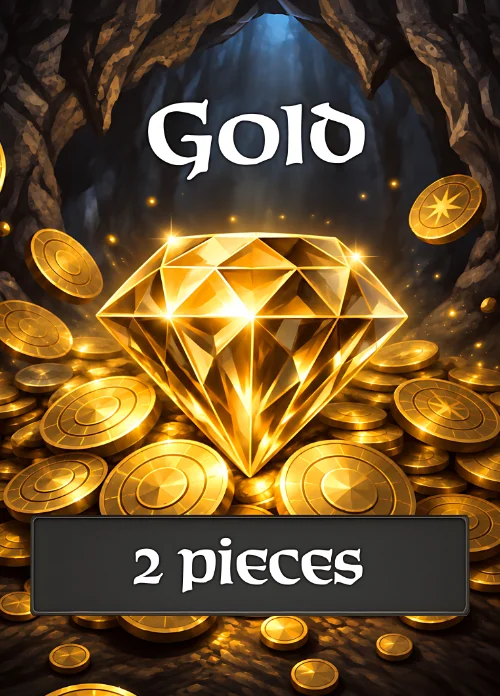
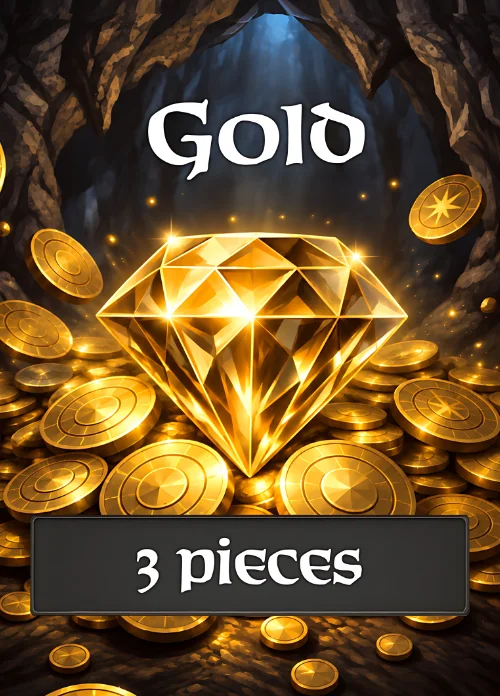
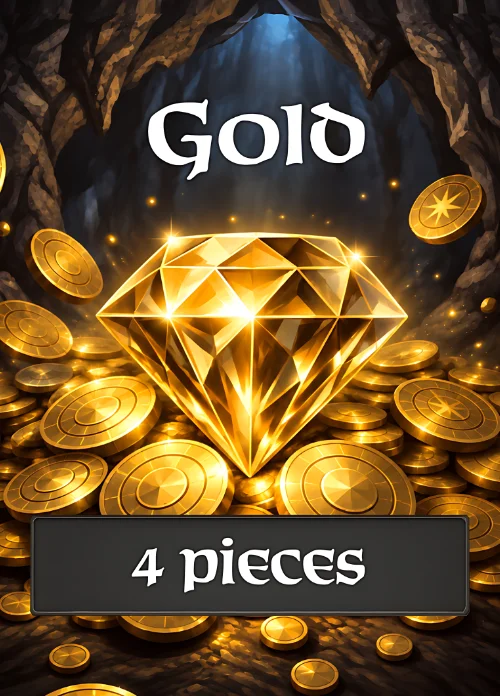
Gold Cards
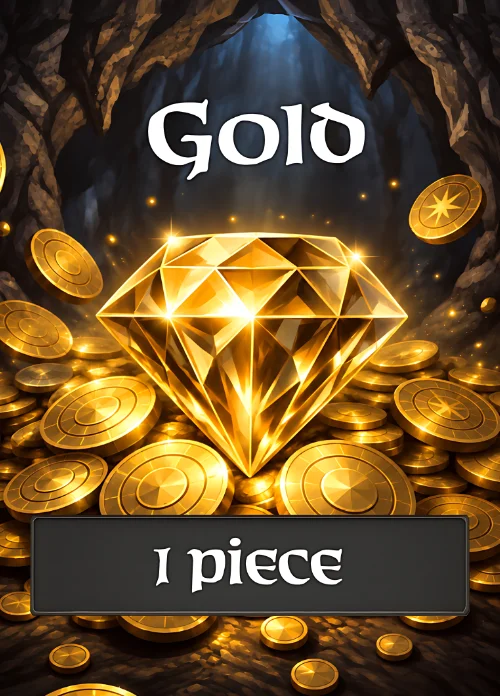
Gold Cards are stored face down in your Vault and used to make payments to other players.

Spell Cards
Spell Cards produce magical effects when played from your hand. They can also be placed face down in your Vault and used for their printed gold value instead.
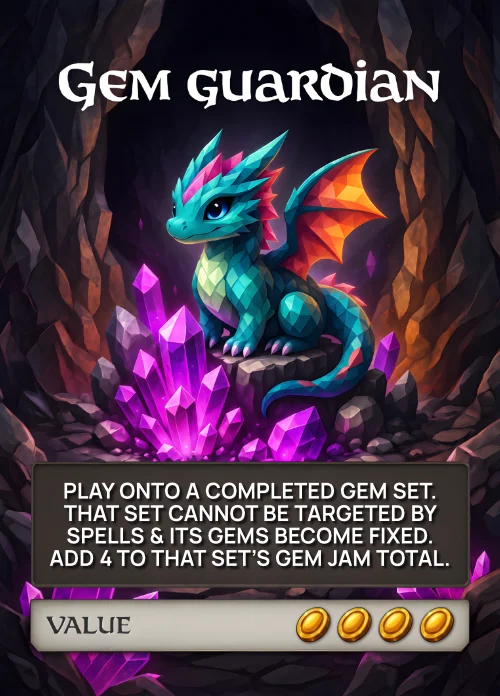
Gem Guardian is a Spell Card played onto a completed set to protect it.
Some spells are reactive and may be played in response to another player’s spell.
Gem Jam & Payments
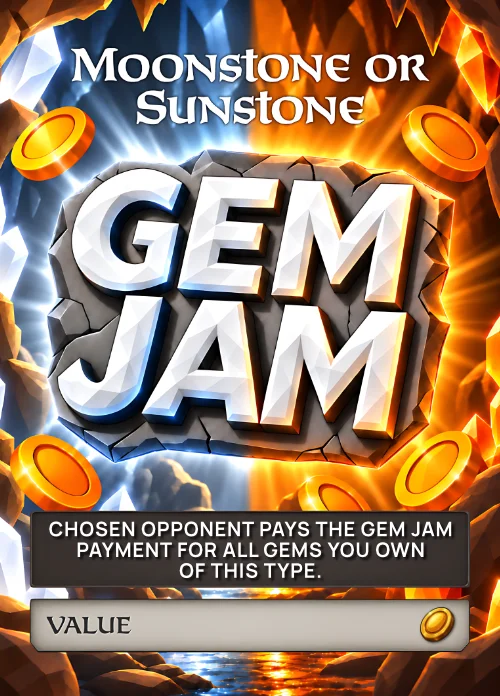
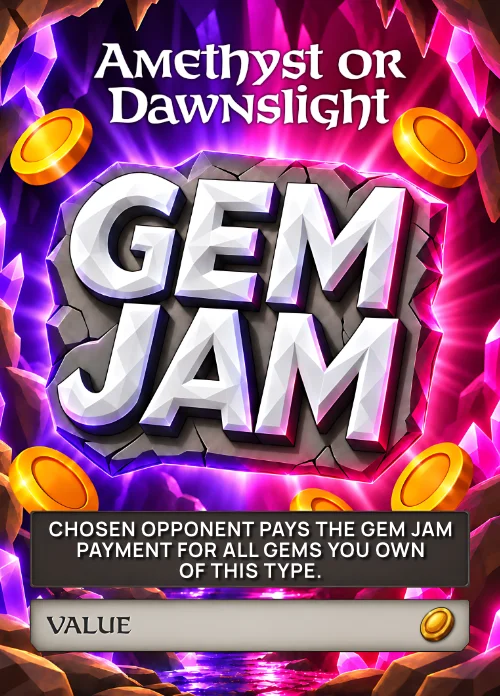
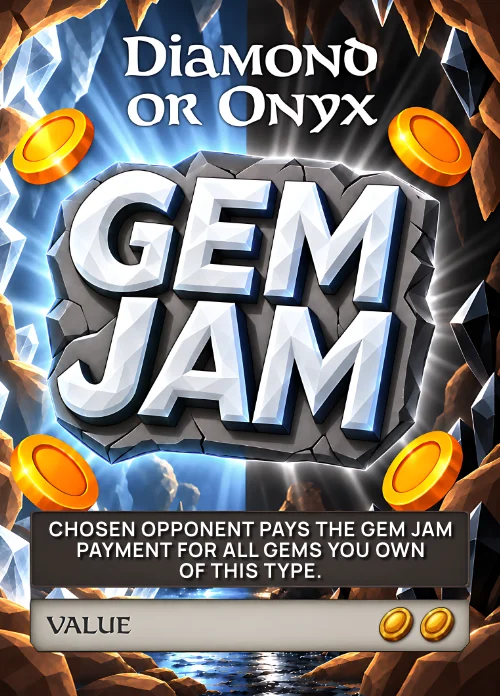
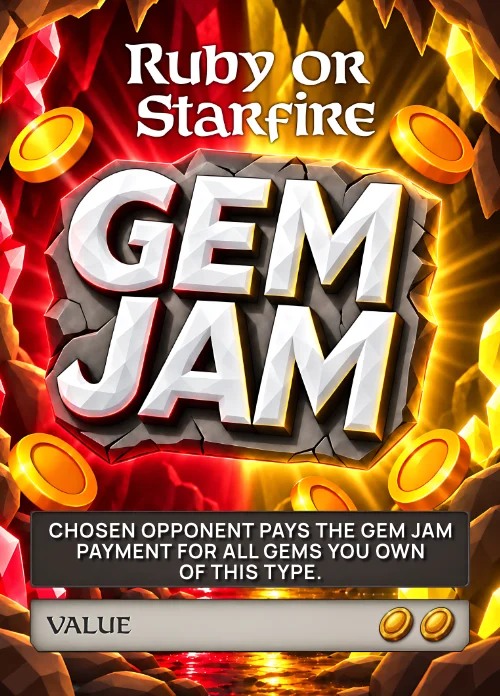
These spells allow you to demand gold payments from your opponents. Gem Jam payments are calculated using the gems in your Gem Shrine.

Gem Manipulation
These spells allow you to steal, destroy or swap individual gems, or even take or destroy entire completed sets.
Hand, Deck & Vault Manipulation
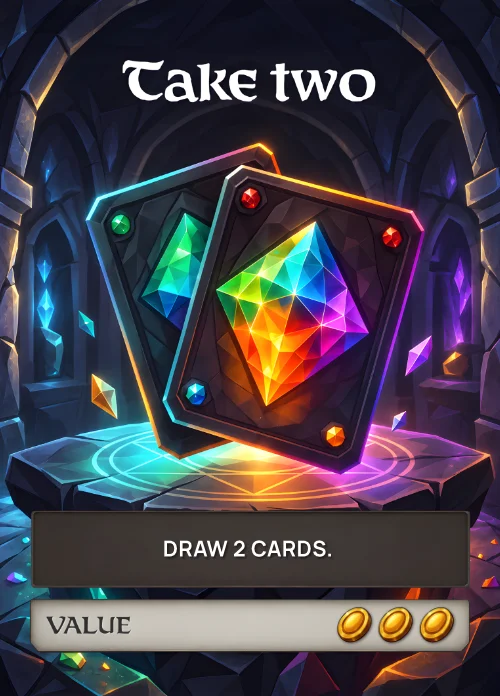
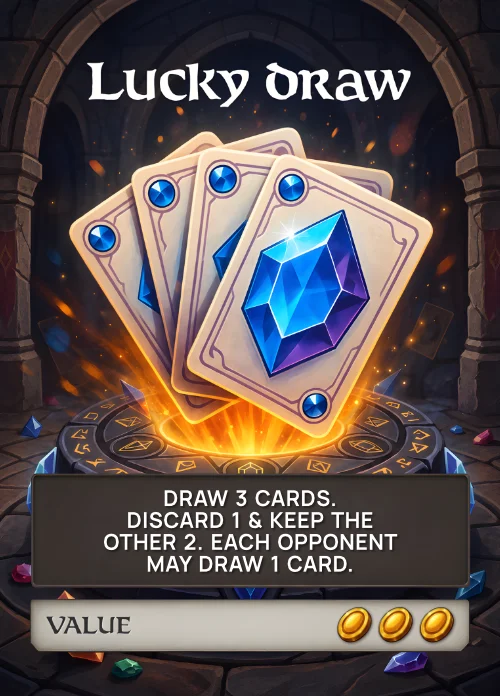
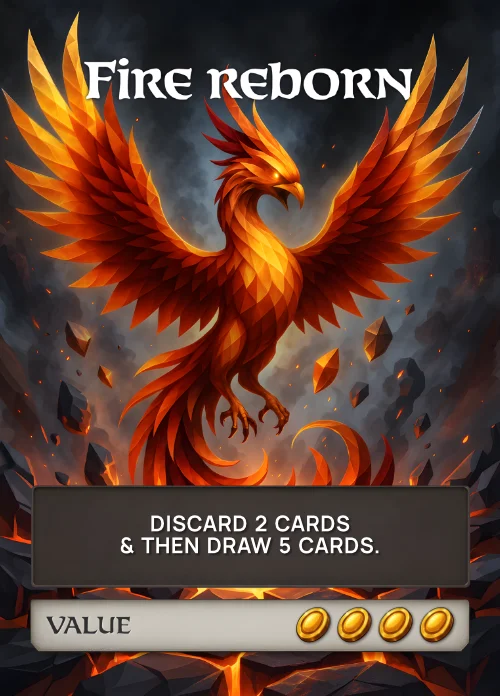
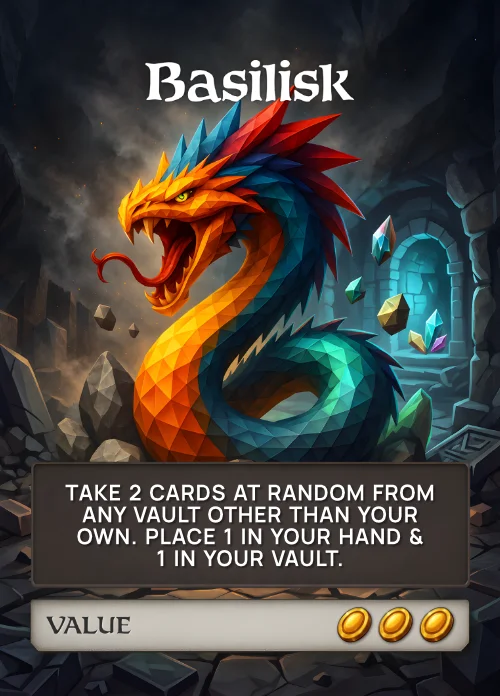
These spells allow you to draw, steal, discard or recover cards, manipulating players’ hands, the Draw Pile, Discard Pile and Vaults.
Protection & Disruption
These spells allow you to protect completed gem sets, counter or take control of other spells, and temporarily restrict your opponents’ actions.

Optional Adult Game Mode (18+)
For a cheekier version of Gem Jam, shuffle the three Siren’s Call cards into the deck.
Siren’s Call: Choose a player to remove one item of clothing, then draw one card.
Losing Penalty: The player who loses the game must remove one item of clothing.
This optional game mode is strictly for consenting adults aged 18 or over. All players must agree to the rules before the game begins.
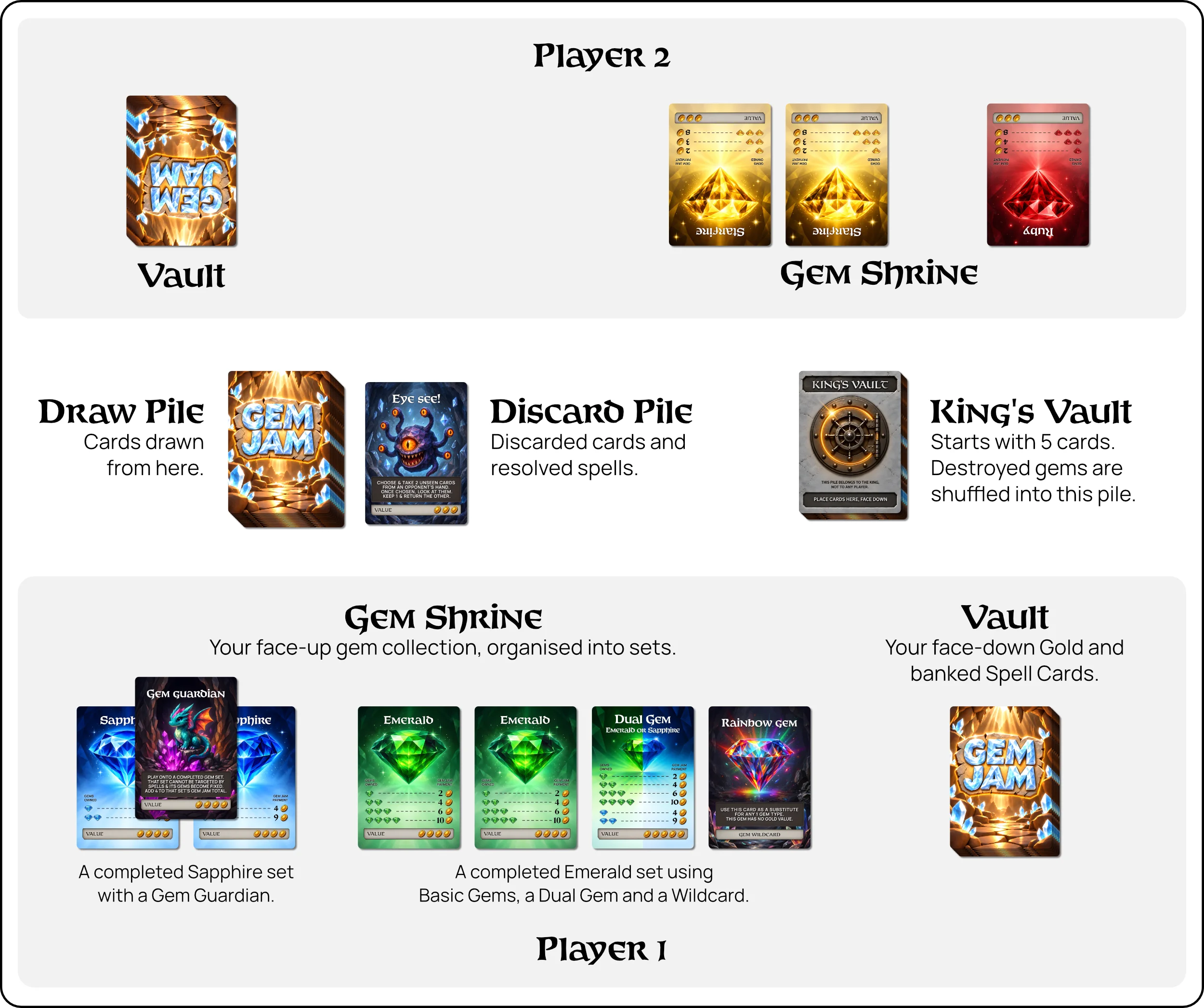
4. Playing Areas
Each player has two areas:
Gem Shrine: Your face-up gem collection, organised into sets. Gem Guardians are attached to completed sets here.
Vault: Your face-down collection of Gold Cards and banked Spell Cards.
Three shared areas sit in the centre of the table:
Draw Pile: The face-down deck from which players draw cards.
Discard Pile: The face-up pile for discarded cards and resolved spells.
King’s Vault: A separate face-down pile containing five cards at the beginning of the game. Destroyed gems and certain forfeited gems are shuffled into this pile. The King’s Vault belongs to no player.
5. How to Start
- Set aside the King’s Vault marker and any optional adult-only cards not being used.
- Shuffle the remaining deck and deal five cards to each player.
- Place the King’s Vault marker face up with five random cards face down beneath it.
- Place the remaining cards face down as the Draw Pile and leave space for the Discard Pile.
- Each player creates space for their Gem Shrine and Vault.
- Choose a starting player and optional timer.
Play proceeds clockwise.
6. How to Play
Each turn consists of four stages.
Stage 1 – Prepare
If you already have four valid completed sets, you may declare victory immediately.
Otherwise, turn over your timer, if using one.
Before drawing, you may make one gem adjustment. You may also choose not to adjust any gems.
Stage 2 – Draw
Draw two cards from the Draw Pile.
If your hand was empty at the start of your turn, draw five cards instead.
Stage 3 – Play
You may play up to three cards, in any combination or order.
- Place a Gem Card face up in your Gem Shrine.
- Place a Gold Card face down in your Vault.
- Bank a Spell Card face down in your Vault.
- Cast a Spell Card from your hand.
- Play a Gem Guardian onto a completed, unprotected set.
Each normally counts as one play. You do not have to use all three plays.
Some spells grant additional plays. Reactive spells do not count towards your three-card limit.
Important: Gem Cards cannot be played directly into your Vault, even if they have a gold value. Gem Cards must be played into your Gem Shrine unless a card effect specifically directs otherwise.
Stage 4 – End Your Turn
You may keep a maximum of seven cards in your hand.
If you have more than seven, choose which cards to place at the bottom of the Draw Pile.
Before ending your turn, check whether you have restored any completed sets that you voluntarily broke to rearrange Dual Gems or Gem Wildcards.
If any such set remains incomplete, its remaining gems are shuffled face down into the King’s Vault.
Play passes clockwise to the next player.
7. Adjusting Your Gems
Before drawing, you may make one adjustment:
- Move: Move one gem to another position or set in your Shrine.
- Swap: Swap the positions of any two gems.
- Change: Change the represented type of one Dual Gem or Gem Wildcard.
A swap counts as one adjustment, even though two gems move.
Dual Gems and Gem Wildcards may also change type when moved or swapped, subject to their individual card instructions.
Both gems involved in a swap may change type if permitted.
Basic Gems cannot change type, although they may be moved or swapped.
Gems belonging to Guardian-protected sets cannot be moved, swapped or changed.
Breaking a Completed Set
You may voluntarily break an unprotected completed set to rearrange your Dual Gems or Gem Wildcards. This is a gamble, as you must restore that set by the end of your turn.
If you fail to restore it, all remaining gems in that set are shuffled face down into the King’s Vault.
The adjustment is not undone, and you do not automatically lose the game.
Example: You move a Rainbow Gem out of a completed three-gem Ruby set. If you fail to restore the Ruby set by the end of your turn, its two remaining gems go into the King’s Vault. The Rainbow Gem stays in its new position.
When Does the Penalty Apply?
The King’s Vault penalty applies when you voluntarily break a completed set to rearrange Dual Gems or Gem Wildcards.
It does not apply when a set is broken solely by an opponent’s spell or a compulsory payment. Those sets may be rebuilt normally.
However, once you voluntarily take the risk of breaking a completed set, you must restore it by the end of your turn.
If another spell or effect subsequently prevents you from restoring that set, the penalty still applies.
Any gems remaining in the incomplete set are forfeited to the King’s Vault.
8. Completing Gem Sets
Each gem type requires a different number of matching cards.
| Gems Required | Gem Types |
|---|---|
| 2 | Amethyst, Sapphire |
| 3 | Ruby, Starfire, Quartz, Ice Shard, Moonstone, Sunstone, Diamond, Onyx |
| 4 | Emerald, Dawnslight |
Each completed set must contain at least one actual Basic Gem.
Example: A Completed Ruby Set
A Ruby set requires three gems. It can consist of:
- One Basic Ruby
- One Dual Gem representing Ruby
- One Rainbow Gem representing Ruby
This is a completed set because it contains three Ruby-type gems, including one Basic Ruby.
Three Dual Gems or Gem Wildcards cannot form a completed set without a Basic Gem.
You may begin another set of the same type once your previous set is complete.
A set broken by an opponent’s spell or required payment becomes incomplete and may be rebuilt later.
9. Gem Wildcards
Rainbow Gem
Rainbow Gem may represent any one gem type.
Its represented type may be changed through your permitted adjustment.
Magic Mushroom
Magic Mushroom may represent any one gem type.
When played from your hand, draw one card.
This ability activates each time Magic Mushroom is played from your hand, including when it has been returned to your hand and played again. Moving, swapping or changing its type while it remains in play does not trigger another draw.
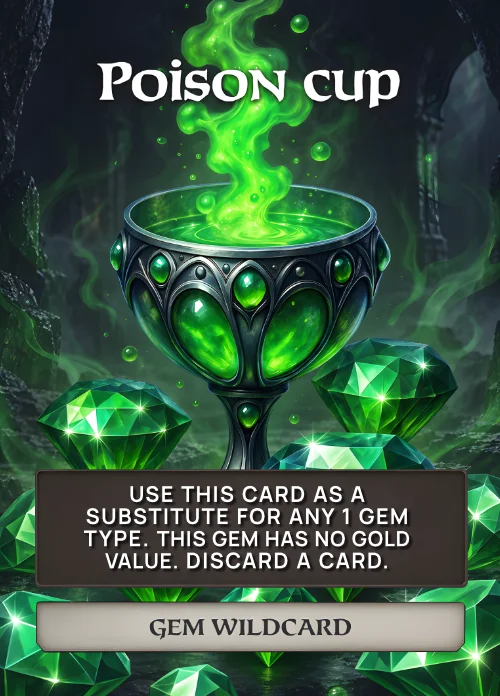
Poison Cup
Poison Cup may represent any one gem type.
When played from your hand, discard one card from your hand if possible.
This ability activates each time Poison Cup is played from your hand, including after returning it to your hand and replaying it.
Moving, swapping or changing Poison Cup while it remains in play does not trigger another discard.
Mirror Madness
Mirror Madness copies the type of a Basic Gem currently held in an opponent’s Gem Shrine.
It always remains a Gem Wildcard. It cannot count as a Basic Gem or independently qualify you to cast Gem Jam.
When played, choose an opponent’s actual Basic Gem. Mirror Madness represents that gem type.
If the original Basic Gem is later removed, Mirror Madness retains its chosen type. You may change its type through a permitted adjustment, but the new type must be represented by an actual Basic Gem currently held by an opponent.
Example: You copy an opponent’s Basic Ruby. Their Ruby is later destroyed, but Mirror Madness remains Ruby.
You subsequently change it to Sapphire. You cannot change it back to Ruby unless an opponent once again has a Basic Ruby in play. If no opponent has an eligible Basic Gem, Mirror Madness cannot be played from your hand.
Returning Mirror Madness to your hand resets its copied type.
10. Casting Gem Jam
Gem Jam spells force your opponents to pay you gold.
To cast Gem Jam, you must have at least one Basic Gem or Dual Gem representing the chosen gem type in your Shrine.
Gem Wildcards alone cannot qualify you to cast Gem Jam. Once you qualify, all gems representing the chosen type contribute towards the payment, including Dual Gems and Gem Wildcards.
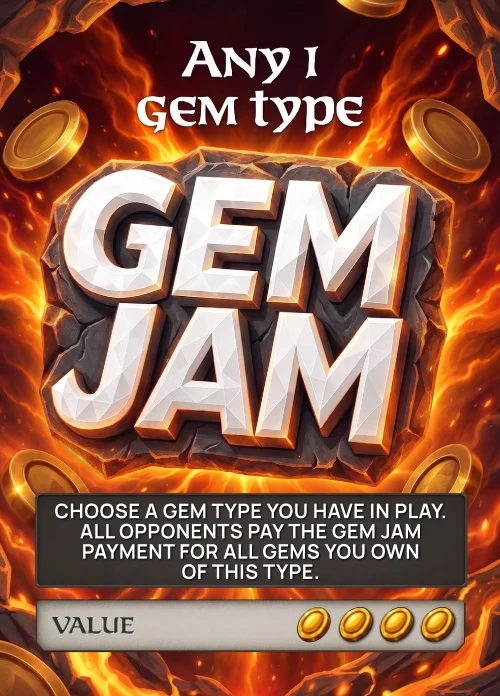
Any 1 gem type Gem Jam
Choose any eligible gem type.
All opponents must pay, each making a separate payment based on your gems of that type.
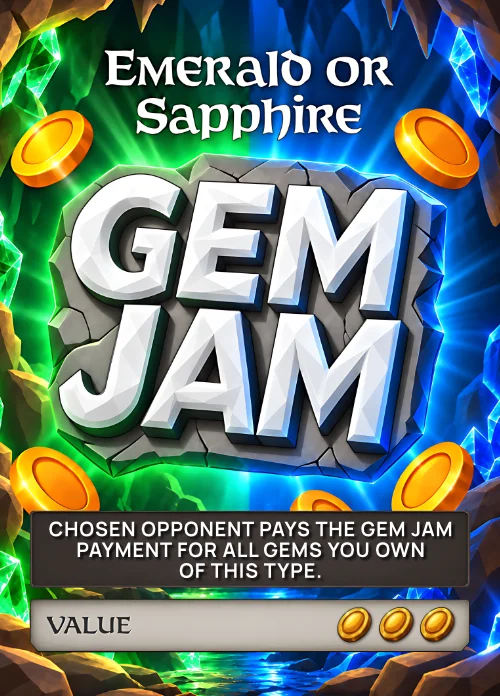
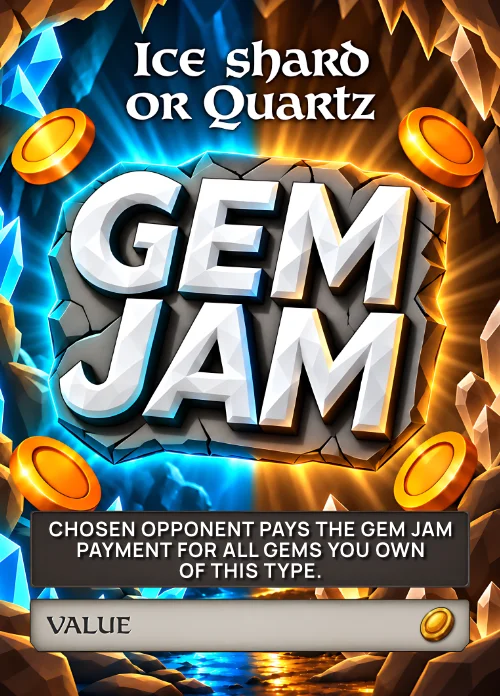
Paired Gem Jam
Choose one of the two gem types shown on the card and one opponent to pay.
For example, an Emerald or Sapphire Gem Jam allows you to choose either Emerald or Sapphire.
The chosen opponent must pay the amount calculated for that type.
11. Calculating Gem Jam
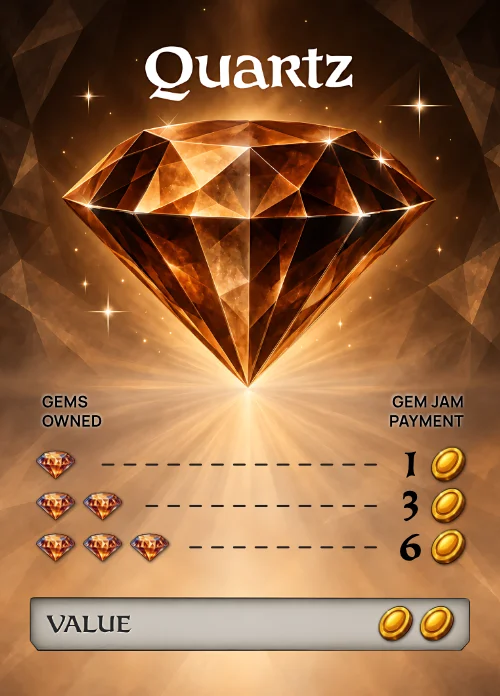
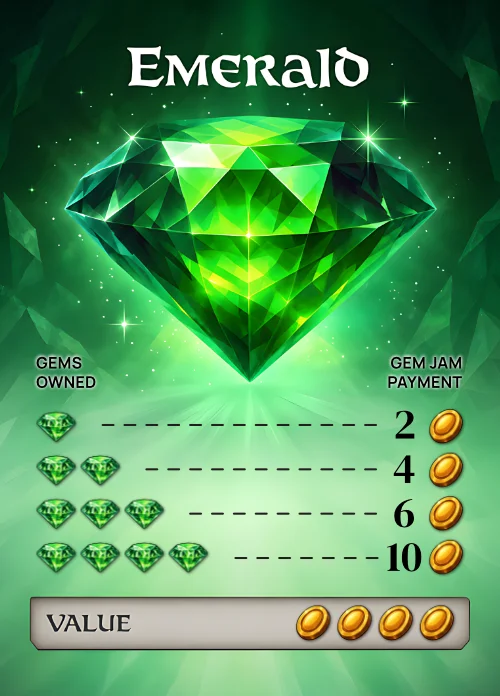
Count all gems representing the chosen type in your Shrine, including Dual Gems and Gem Wildcards. Use the payment values printed on the corresponding Gem Cards. Calculate complete groups and remaining gems using the printed values.
Example: Four Ruby-Type Gems
| Ruby-Type Gems | Gold |
|---|---|
| 1 | 2 |
| 2 | 4 |
| 3 | 8 |
Four Ruby-type gems produce 10 gold: 8 for the first group of three, plus 2 for the remaining Ruby.
Six Ruby-type gems produce 16 gold: two groups of three, each worth 8. You do not need a completed set to cast Gem Jam, provided you meet the Basic Gem or Dual Gem eligibility requirement.
Gem Guardian Bonuses
Each Guardian protecting a completed set of the chosen type adds 4 gold to the Gem Jam payment. Multiple Guardian bonuses can accumulate.
Example: Two completed Ruby sets produce 16 gold. Both are protected by Guardians, adding another 8 gold.
Total payment: 24 gold.
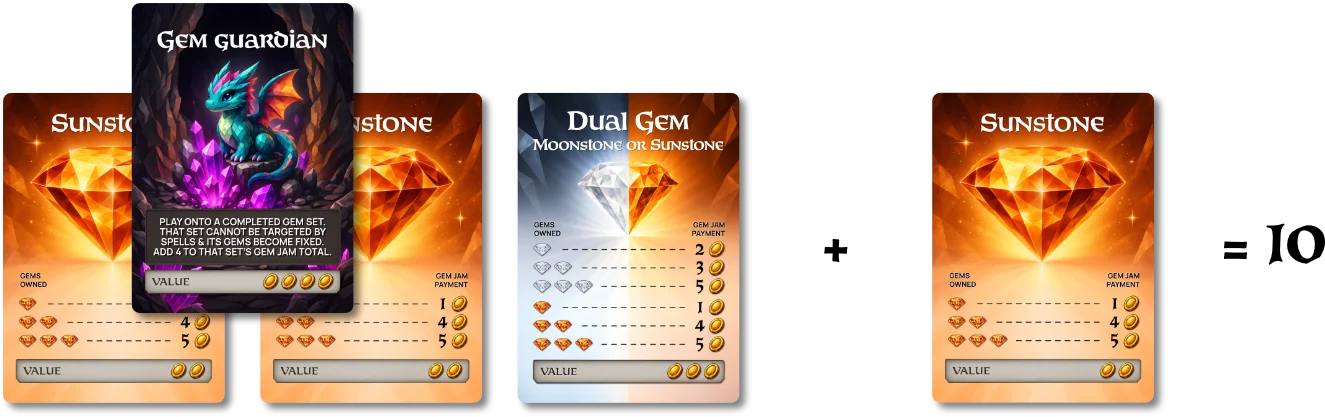
Example: Sunstone With a Guardian
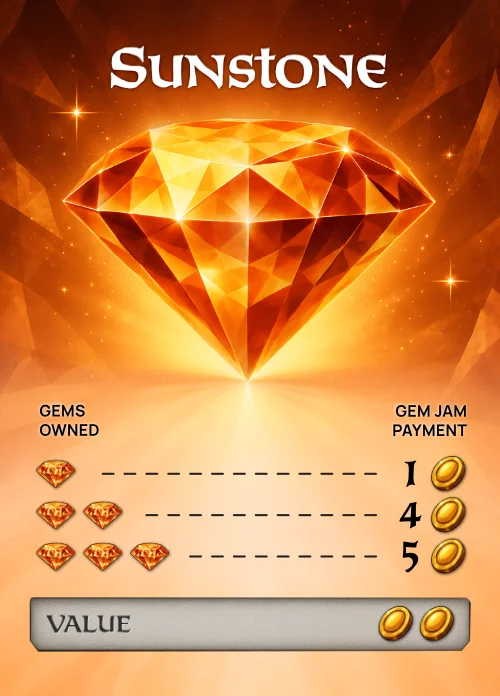
A completed three-card Sunstone set produces 5 gold.
Its Gem Guardian adds 4 gold. One additional Sunstone-type gem contributes another 1 gold.
Total: 5 + 4 + 1 = 10 gold.
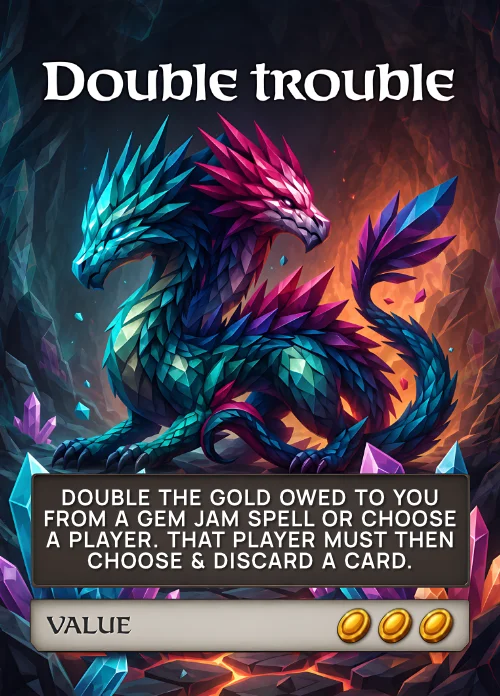
12. Double Trouble
Double Trouble has two possible effects. You must choose one when playing the card.
Option 1 – Double a Gem Jam Payment
Play Double Trouble alongside Gem Jam to double the entire payment, including Guardian bonuses.
One successful Double Trouble doubles the payment. Two successful Double Trouble spells multiply it by four.
For an Any 1 Gem Type Gem Jam, the multiplier applies to each opponent’s payment. Gem Jam and Double Trouble are separate Spell Cards. Opponents must have an opportunity to counter each one.
Double Trouble uses one of your available card plays.
Option 2 – Force a Discard
Alternatively, choose one opponent. That opponent must choose and discard one card from their hand, if available.
This effect must be used independently of Gem Jam and cannot be combined with the doubling effect of the same card.
13. Your Vault
Your Vault contains face-down cards stored for their gold value.
You may bank:
- Gold Cards
- Spell Cards
A banked Spell Card functions only as gold while in your Vault. Its spell ability is inactive.
If returned to your hand by a permitted card effect, it regains its spell ability.
You may inspect your own Vault. Opponents may not inspect it unless a spell permits them to do so.
Gem Cards cannot be played directly into your Vault. Their printed gold values allow Basic Gems and Dual Gems to be used as payment from your Shrine.
14. Making Payments
When another player demands gold, you must use eligible cards already in play.
You may pay with:
- Gold Cards in your Vault.
- Banked Spell Cards in your Vault.
- Basic Gems in your Shrine.
- Dual Gems in your Shrine.
- Gem Guardians.
You cannot pay using cards in your hand or Gem Wildcards.
Who Chooses the Cards?
The player making the payment chooses which eligible cards to surrender.
Must You Pay in Full?
Yes, if possible.
You must pay the amount demanded, even if this means overpaying.
No change is given.
Example: You owe 5 gold and have eligible cards worth 3 and 4 gold. You must surrender both, paying 7 gold.
You may also choose to overpay using a higher-value card.
What If You Cannot Afford It?
You must surrender as much eligible value as possible.
The unpaid balance is forgiven. You do not carry a debt into a later turn.
Can Payment Break a Completed Set?
Yes. Basic Gems and Dual Gems may be used as payment even when they belong to an unprotected completed set.
The set then becomes incomplete.
The King’s Vault penalty for voluntarily rearranging Dual Gems or Gem Wildcards does not apply to sets broken solely by compulsory payment.
Receiving Payment
Cards received are placed according to their type.
| Received Card | Destination |
|---|---|
| Gold Card | Your Vault |
| Banked Spell Card | Your Vault |
| Basic Gem | Your Shrine |
| Dual Gem | Your Shrine |
| Gem Guardian | Eligible completed set or Vault |
When receiving a Dual Gem, you choose which of its two types it represents.
A received Gem Guardian may immediately be attached to an eligible completed, unprotected set at no additional play cost. Otherwise, place it in your Vault.
Received cards are immediately available for subsequent payments.
15. Gem Guardians
Gem Guardian is a Spell Card played onto a completed, unprotected set.
Only one Guardian may protect each set.
Once attached:
- Spells cannot target gems in the protected set.
- Protected gems cannot be adjusted.
- Gems cannot be moved into or out of the protected set through normal adjustments.
- The Guardian cannot be moved to another set through an adjustment.
- The protected set adds 4 gold to relevant Gem Jam payments.
Guardian protection does not stop spells that affect the player generally without targeting the protected set.
Paying with a Guardian
You may use gems from a Guardian-protected set to make a payment, but you must pay with the attached Gem Guardian first. Its printed gold value counts towards the amount owed.
Once the Guardian has been paid, the set is no longer protected, and its gems may be used to cover any remaining payment.
The player receiving the Guardian may immediately attach it to an eligible completed, unprotected set or place it in their Vault.
16. Playing and Countering Spells
Most Spell Cards are played during your own turn and count towards your three available plays.
When casting a spell, announce it and allow opponents a fair opportunity to respond before resolving its effect.
Reactive spells can be played during another player’s turn without using one of your normal plays.
Countering Spells
Counter Spell and Diabolic Denial cancel the entire most recently played spell.
This includes spells affecting several opponents.
Countering spells may themselves be countered.
Only the most recently played spell in a response chain may be countered.
Countering Example
- Player A casts Armageddon.
- Player B responds with Counter Spell.
- Player A responds with Diabolic Denial.
- Diabolic Denial cancels Counter Spell.
- Armageddon proceeds unless another valid reaction prevents it.
Reaction Priority
The first player to announce a valid reaction takes priority.
If players announce simultaneously, priority goes clockwise from the player whose turn is currently taking place.
Once a later spell is played, opponents cannot go back and counter an earlier spell in the chain.
Example: After Gem Jam has had its opportunity to be countered, Double Trouble is played. Opponents may now counter Double Trouble, but cannot retrospectively counter Gem Jam.
Invalid Targets
A spell played without a valid target fails and enters the Discard Pile after resolution. If it was an ordinary play, that play is still used.
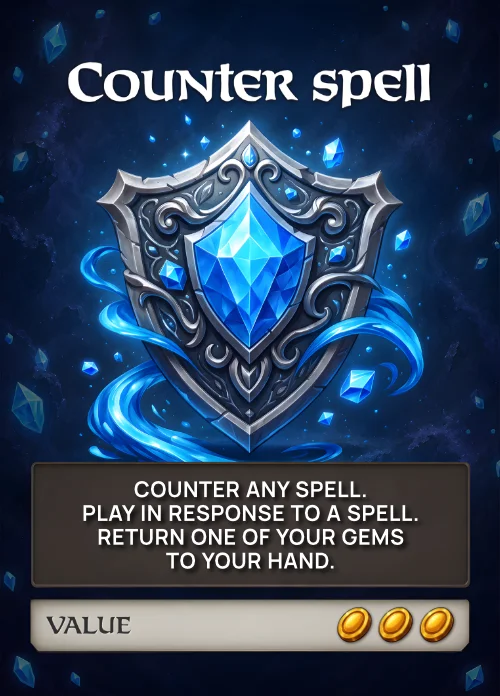
Counter Spell
Cancels the entire targeted spell. After casting Counter Spell, return one eligible gem from your Shrine to your hand if possible.
This is part of Counter Spell’s effect, not a casting cost. The spell still works if you have no eligible gem to return.
Gems protected by Gem Guardian cannot be returned.
If you have an eligible unprotected gem, you must return one, even if it belongs to a completed set.
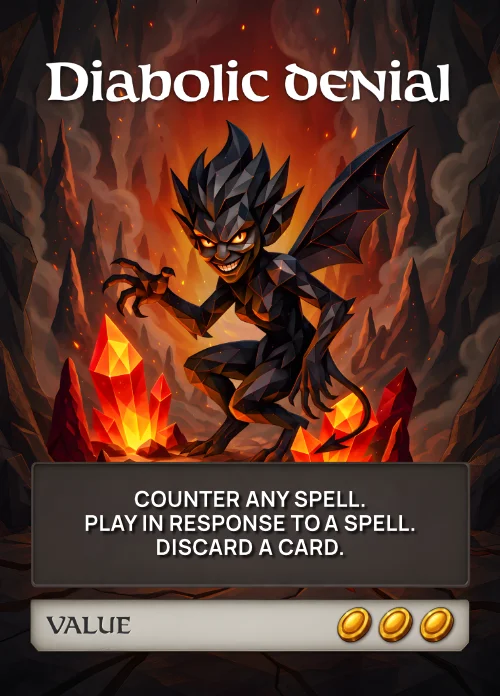
Diabolic Denial
Cancels the entire targeted spell.
After casting, discard one card from your hand if possible.
Discarding is part of the effect, not a casting cost. Diabolic Denial still works if your hand is empty.
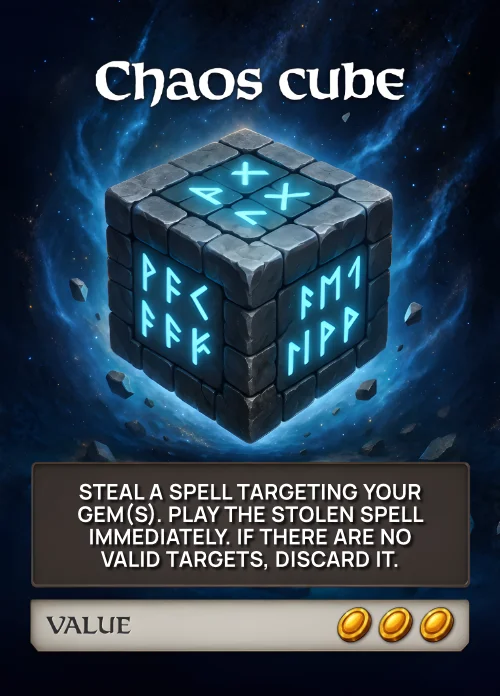
Chaos Cube
Chaos Cube is a free reactive spell that allows you to take control of a spell targeting one or more of your gems.
You immediately recast the stolen spell against new valid targets, potentially including the original caster.
The redirected spell can itself be countered.
If Chaos Cube is countered, the original spell continues against its original targets unless another effect prevents it.
Chaos Cube cannot redirect a spell that does not target your gems.
17. The Discard Pile and King’s Vault
The Discard Pile
Used spells enter the Discard Pile only after their effects have resolved.
Cards discarded from players’ hands also enter this pile.
Gems destroyed during play do not enter the Discard Pile.
The King’s Vault
The King’s Vault starts with five random cards dealt during setup.
Destroyed gems are placed face down and shuffled into this pile.
Remaining gems from a completed set that has not been restored following a voluntary rearrangement of Dual Gems or Gem Wildcards also go into the King’s Vault.
Cards in the King’s Vault cannot be retrieved through Reanimate or Nature’s Rebirth.
They can, however, be accessed by spells that specifically allow players to search or take cards from a Vault.
18. Complete Spell Reference
The following reference explains each standard spell’s effect. Normal rules for targeting, payments, countering and protected sets still apply.
Gem Jam & Payments
Any 1 Gem Type Gem Jam: Choose one eligible gem type. Every opponent pays the calculated Gem Jam amount.
Ruby / Starfire Gem Jam: Choose Ruby or Starfire and one opponent to pay.
Emerald / Sapphire Gem Jam: Choose Emerald or Sapphire and one opponent to pay.
Amethyst / Dawnslight Gem Jam: Choose Amethyst or Dawnslight and one opponent to pay.
Ice Shard / Quartz Gem Jam: Choose Ice Shard or Quartz and one opponent to pay.
Moonstone / Sunstone Gem Jam: Choose Moonstone or Sunstone and one opponent to pay.
Diamond / Onyx Gem Jam: Choose Diamond or Onyx and one opponent to pay.
Double Trouble: Choose one of two effects: double a Gem Jam payment, including Guardian bonuses, or force one opponent to discard one card from their hand. The effects cannot be combined when playing a single Double Trouble card.
Shakedown: Choose one opponent. They must pay you 5 gold.
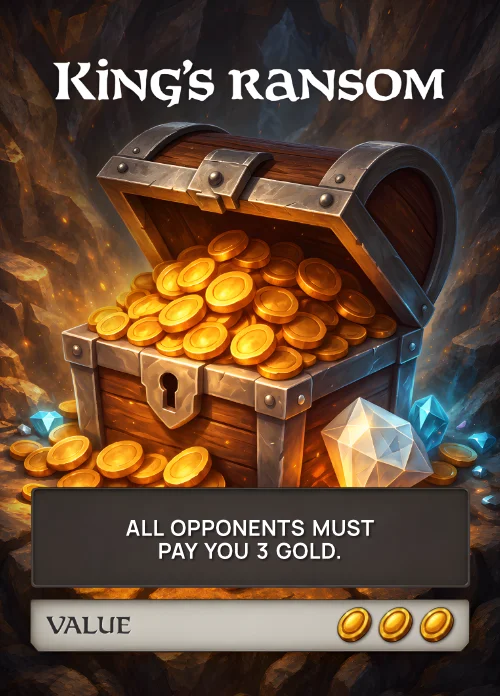
King’s Ransom: Every opponent must pay you 3 gold.
Gem Manipulation
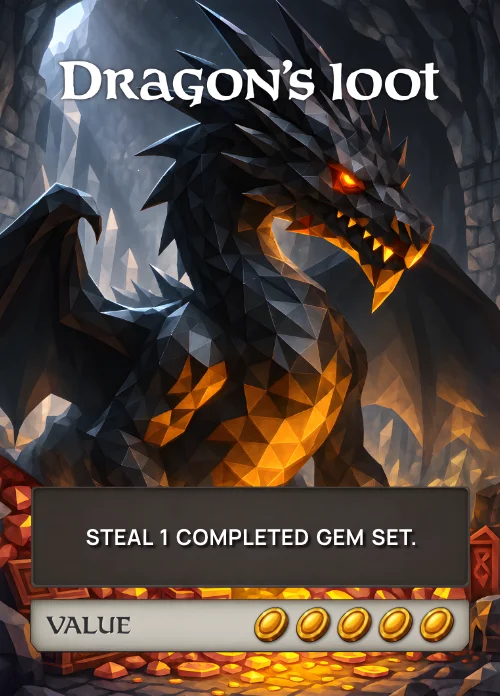
Dragon’s Loot: Steal one completed, unprotected gem set from an opponent.
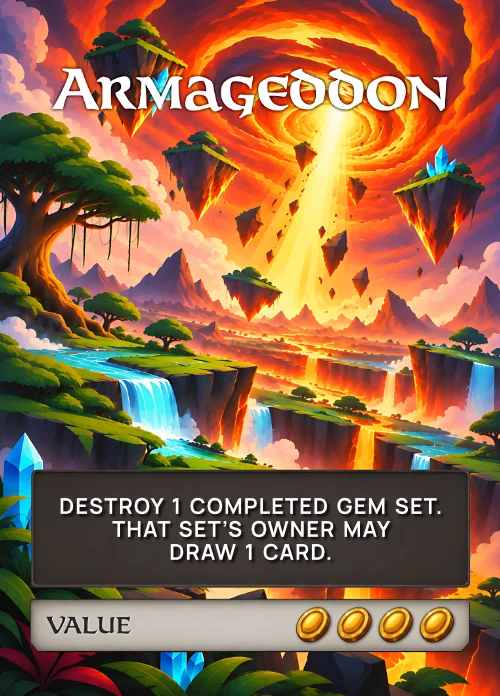
Armageddon: Destroy one completed, unprotected gem set. Its owner may draw one card.
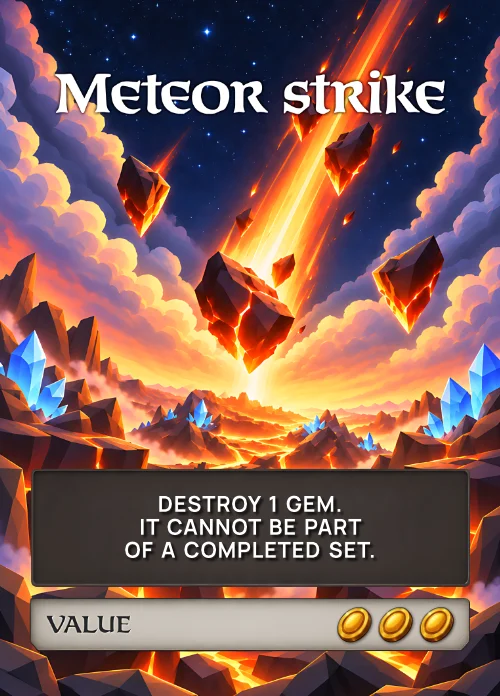
Meteor Strike: Destroy one gem that is not part of a completed set.
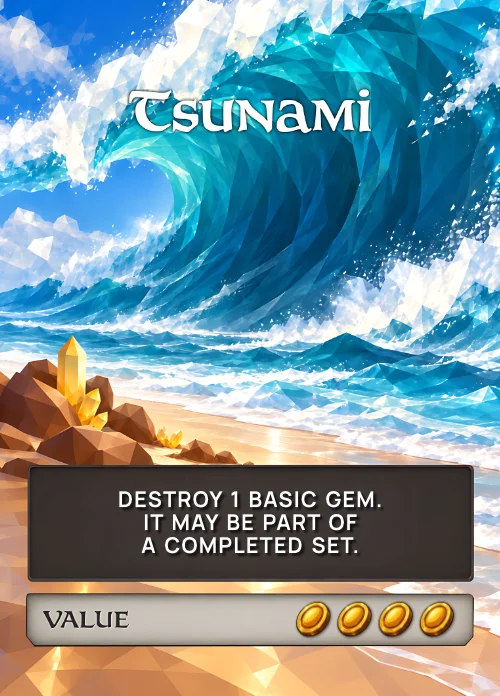
Tsunami: Destroy one Basic Gem, including one in an unprotected completed set.
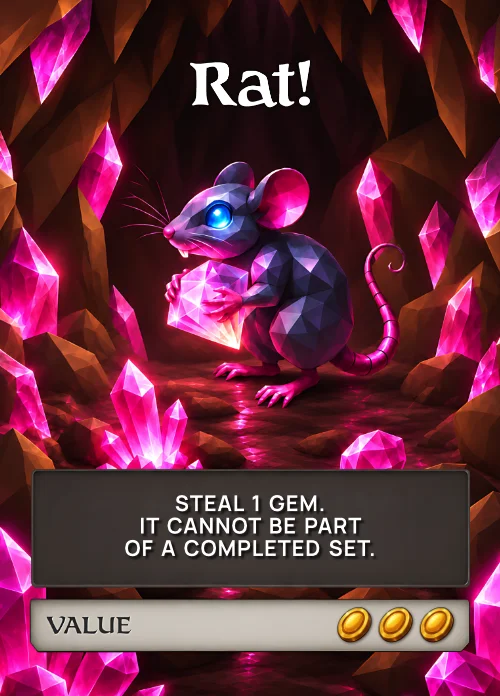
Rat!: Steal one gem that is not part of a completed set.
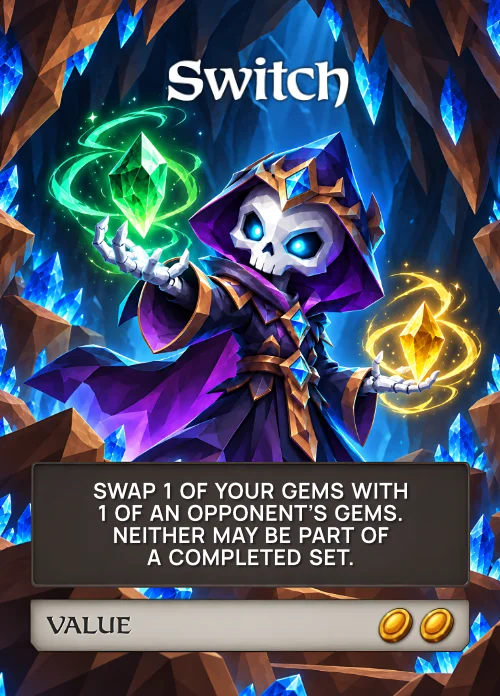
Switch: Swap one of your gems with one opponent’s gem. Neither may belong to a completed set.
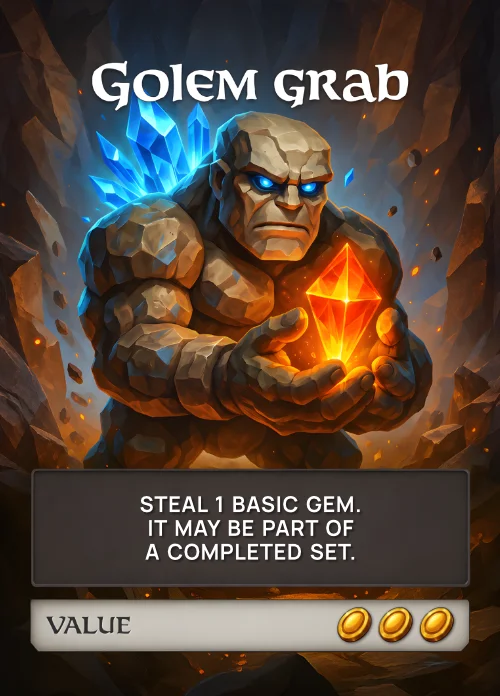
Golem Grab: Steal one Basic Gem, including one in an unprotected completed set.
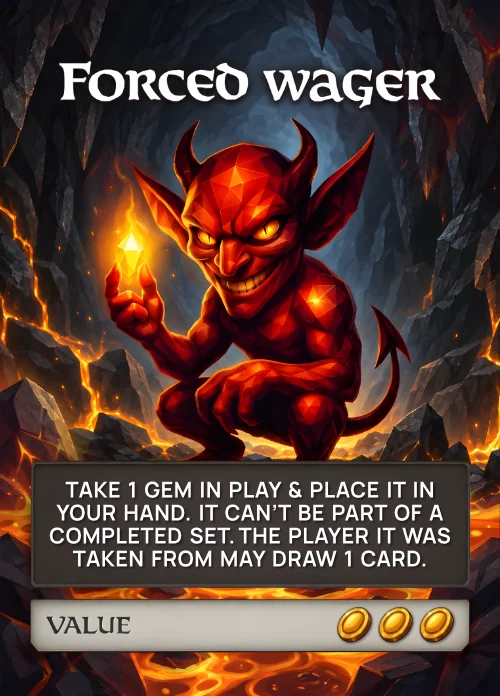
Forced Wager: Take one gem in play that is not part of a completed set and place it in your own hand. The gem’s original owner may draw one card. You may target your own eligible gem.
Forced Wager Example – Magic Mushroom
You use Forced Wager on your own Magic Mushroom in an incomplete set.
The Mushroom returns to your hand. As its original owner, you may draw one card.
You then play Magic Mushroom again, choose its gem type and draw another card through its played-from-hand ability.
You have drawn two cards and reassigned Magic Mushroom, using two ordinary card plays.
Hand, Deck & Vault Manipulation
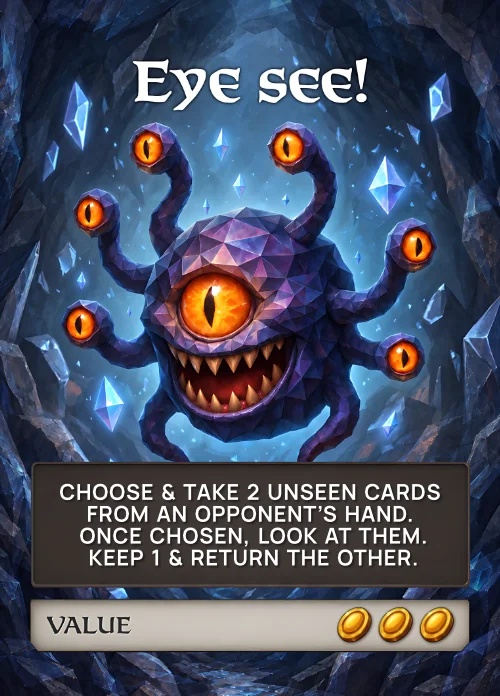
Eye See!: Choose up to two unseen cards from an opponent’s hand. Look at them, keep one and return the other if there is one. If your opponent has only one card, you may take it.
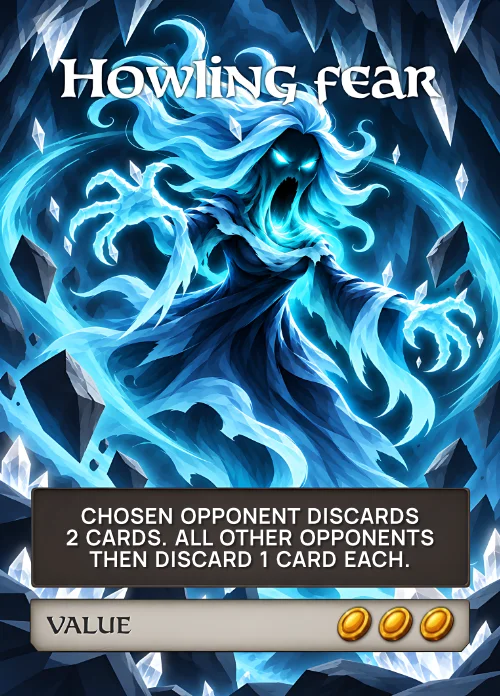
Howling Fear: Choose one opponent to discard two cards. All other opponents discard one card each, if available.
Take Two: Draw two cards.
Lucky Draw: Draw three cards, discard one and keep two. Each opponent may draw one card.
Fire Reborn: Discard two cards from your hand, then draw five. If you have only one card, discard it. If your hand is empty, draw five without discarding.
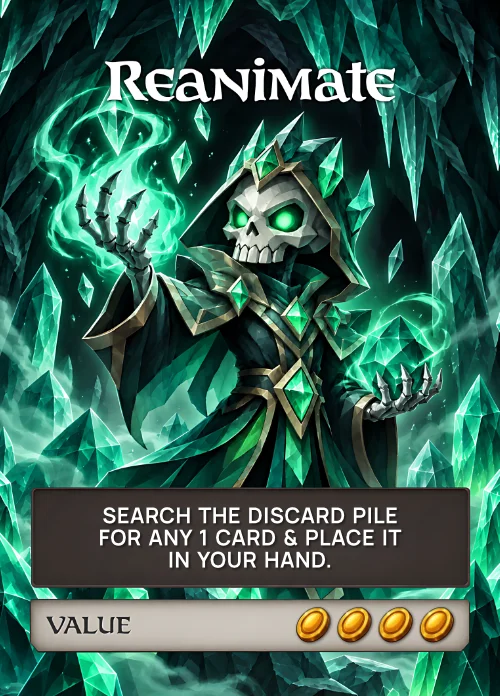
Reanimate: Choose any one card from the face-up Discard Pile and place it in your hand.
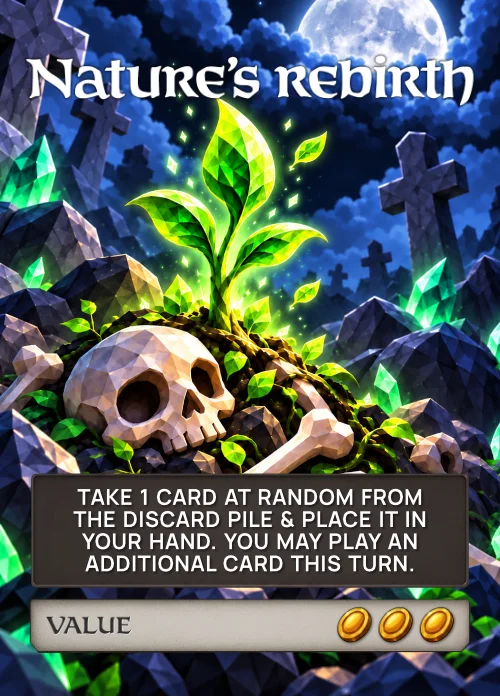
Nature’s Rebirth: Shuffle the Discard Pile face down, take one random card into your hand and return the remaining pile face up. Gain one additional play, even if the pile is empty. Multiple additional-play bonuses can accumulate.
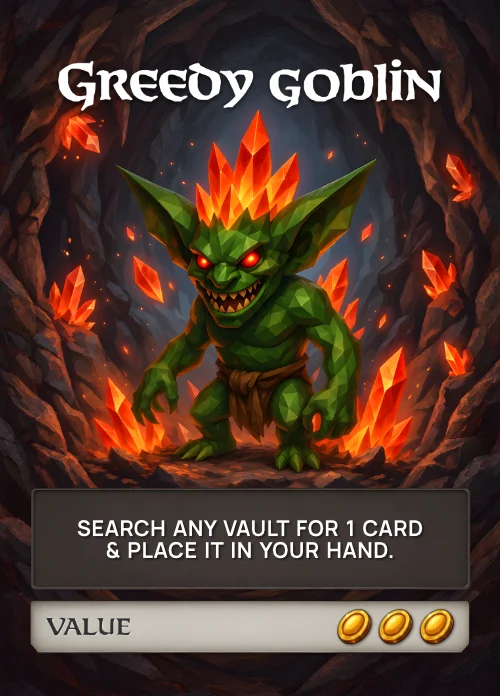
Greedy Goblin: Search any Vault, including your own or the King’s Vault. Choose one card and place it in your hand.
Basilisk: Take two random cards from any Vault other than your own. Place one in your hand and one in your Vault. If only one card is available, choose its destination.
Protection & Disruption
Gem Guardian: Protects one completed set from spells targeting its gems. Prevents adjustments to that set and adds 4 gold to relevant Gem Jam payments.
Counter Spell: Cancels the most recent eligible spell. Return one eligible gem from your Shrine to your hand if possible. Guardian-protected gems cannot be returned.
Diabolic Denial: Cancels the most recent eligible spell. Discard one card from your hand if possible.
Chaos Cube: Takes control of a spell targeting your gems and immediately recasts it against new valid targets.
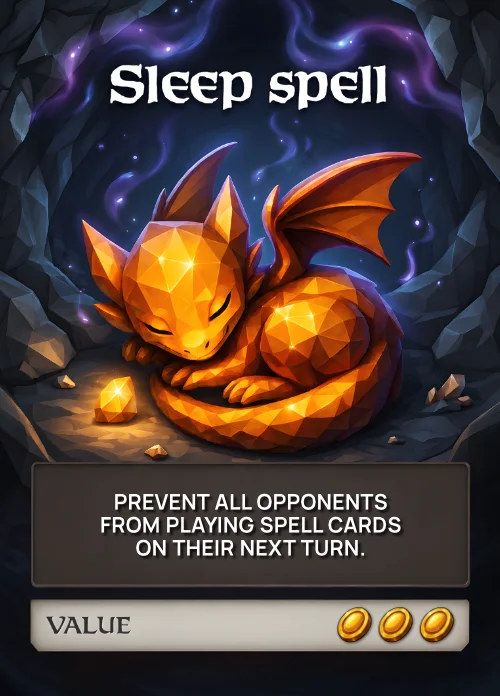
Sleep Spell: Prevents all opponents from casting Spell Cards on their next turn. They may still bank Spell Cards face down in their Vaults.
Freeze: Prevents all opponents from playing Gem Cards on their next turn.
Important: These restrictions do not suspend the King’s Vault penalty. If you voluntarily broke a completed set to rearrange Dual Gems or Gem Wildcards, you must still restore it by the end of your turn or forfeit the remaining gems, even if a spell prevents you from playing the cards needed.
19. Playing with Timers
Timers are optional. Players choose a game mode before starting.
At the start of your turn, flip the chosen sand timer.
Try to complete your turn before the sand runs out.
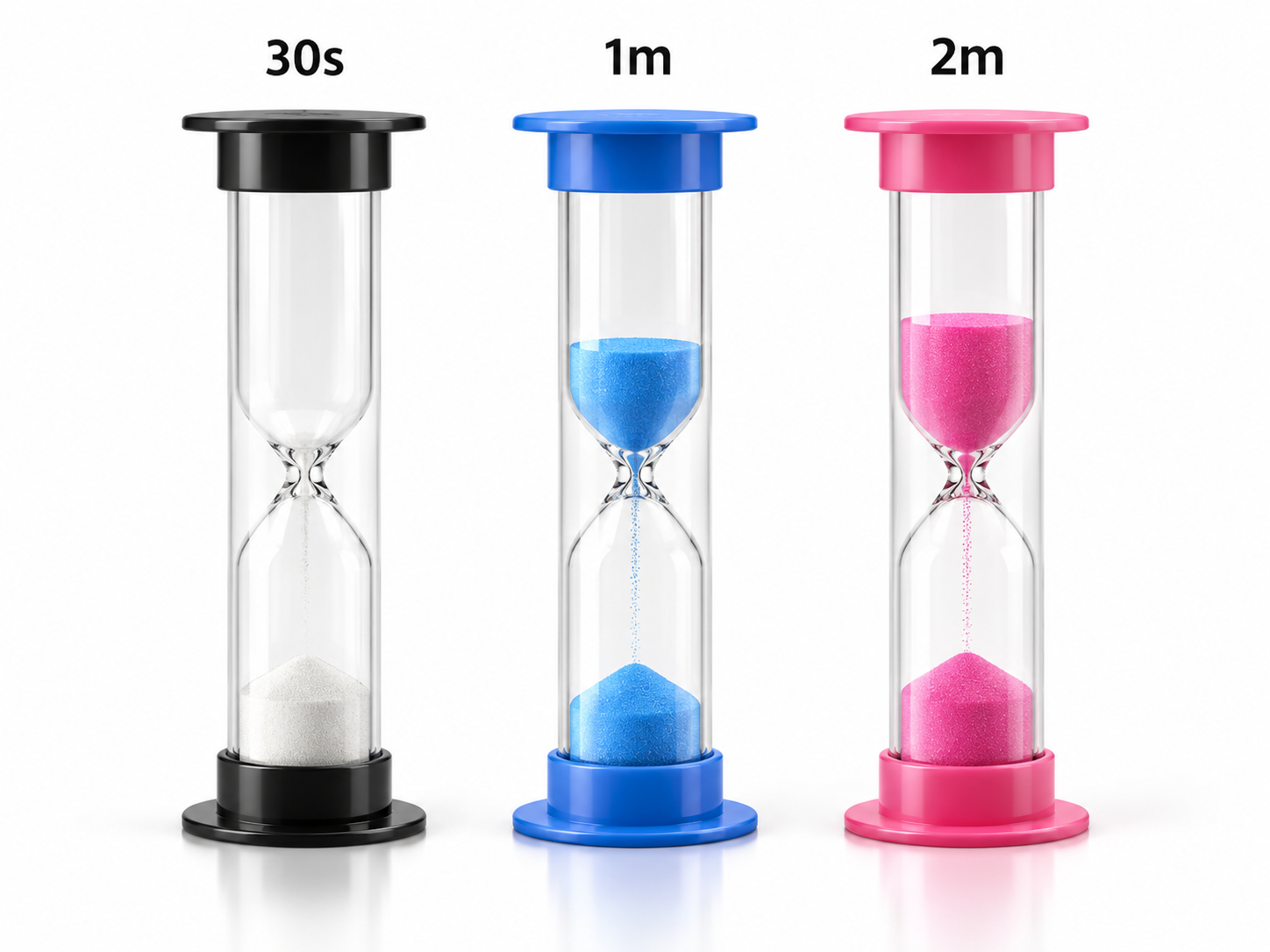
| Game Mode | Time Per Turn |
|---|---|
| Speed Game | 30 seconds |
| Quick Game | 1 minute |
| Standard Game | 2 minutes |
| Relaxed Game | No timer |
Running Out of Time
If your timer expires, a designated opponent may randomly take one unseen card from your hand and place it in the Discard Pile.
The opponent may decline.
The penalty can happen only once per turn.
Your turn continues, whether or not the penalty is applied.
If you have no cards in hand, there is nothing to discard.
Who Applies the Penalty?
- 2 players: Your opponent.
- 3 players: The player to your left.
- 4 players: The player opposite you.
Delays and Countering
The timer continues while opponents respond to spells.
Counters must be announced promptly.
If another player deliberately stalls your turn, you receive an additional 30 seconds.
Relaxed Game uses no timer or timeout penalty.
20. When the Draw Pile Runs Out
The first time the Draw Pile is exhausted, shuffle the Discard Pile to create a replacement Draw Pile.
The King’s Vault remains untouched.
The Discard Pile may be recycled only once.
If the replacement Draw Pile runs out, the game ends immediately.
The player with the most completed gem sets wins.
If two or more players tie for the highest number of completed sets, the game is a draw.
21. Frequently Asked Questions
Can I win with four sets of the same gem type?
Yes. Each completed set counts separately.
Can I complete a set using only Dual Gems and Wildcards?
No. Every completed set requires at least one Basic Gem.
Can a Dual Gem qualify me to cast Gem Jam?
Yes, provided it currently represents your chosen gem type.
Can a Gem Wildcard qualify me to cast Gem Jam?
No. You need a Basic Gem or matching Dual Gem. Wildcards contribute to payment calculations once you qualify.
Does Mirror Madness count as a Basic Gem?
No. It always remains a Gem Wildcard.
Can Mirror Madness copy a Dual Gem?
No. It may only copy a type represented by an actual Basic Gem in an opponent’s Shrine.
Can Mirror Madness keep its type after the copied gem disappears?
Yes. It retains that type until legally changed or returned to your hand.
Can I move a Basic Gem?
Yes. Your one pre-draw adjustment may move any unprotected gem.
Can I swap two Wildcards and change both types?
Yes, provided each change follows the relevant card’s restrictions. The swap counts as one adjustment.
What happens if I voluntarily break a completed set?
If you break a completed set to rearrange Dual Gems or Gem Wildcards, you must restore it by the end of your turn. Otherwise, the remaining gems go into the King’s Vault.
Sets broken by opponents’ spells or compulsory payments do not incur this penalty.
Can an opponent break one of my completed sets?
Yes, an eligible spell can break an unprotected completed set. A compulsory payment may also force you to break a set, but you choose which cards to pay with. Neither situation triggers the voluntary-adjustment penalty.
Can Gem Cards be banked directly in my Vault?
No. Gem Cards must be played into your Gem Shrine unless a card effect specifically directs otherwise.
Can I pay with a Gem Wildcard?
No. Gem Wildcards have no gold value.
Can I pay with gems from a completed set?
Yes. You may break an unprotected completed set to make a required payment.
Can I use protected gems for payment?
Yes, but you must pay with the attached Gem Guardian first. You can then use the gems it was protecting to cover the remaining payment.
Can Counter Spell return a Guardian-protected gem?
No. You must return another eligible gem if you have one. Counter Spell still works if none is available.
Can I counter a Counter Spell?
Yes. Countering spells can themselves be countered.
Can I use Fire Reborn with fewer than two cards?
Yes. If you have one card, you must discard it before drawing five. If your hand is empty, simply draw five. You cannot choose to discard fewer than two cards if you have two or more available.
Can I use Eye See! if an opponent has only one card?
Yes. You may take that card into your hand.
Can I play Spell Cards while affected by Sleep Spell?
You cannot cast Spell Cards during your next turn, but you can still place them face down in your Vault for their gold value.
Can I play Gem Cards while affected by Freeze?
No. Freeze prevents you from playing Gem Cards on your next turn.
Can I restore a broken set while affected by Freeze?
You cannot play Gem Cards during the affected turn. If you previously took the risk of voluntarily breaking a completed set to rearrange Dual Gems or Gem Wildcards, you must still restore that set by the end of your turn or forfeit its remaining gems.
Can I retrieve a Wildcard and activate its ability again?
Yes. If it returns to your hand and is replayed, any played-from-hand ability activates again.
Can I win after my timer expires?
Yes. Running out of time does not end your turn.
Does the designated opponent have to apply the timer penalty?
No. It is optional.